Omnichannel strategy in the age of social distancing.
Is the future of retail online? It may be, but there are a number of advantages to brick- and –mortar retail that have yet to be duplicated in the digital space, and many reasons why people still prefer to do their shopping in person, having said that, the distinctions between the way that merchandise is ordered and fulfilled is vanishing quickly in the age of social distancing; customers will demand a seamless experience from retailers, regardless of how they buy products or take delivery. The distinction that we talk about today between stores, apps, pickup, and delivery will blur into the background at a faster pace for customers, they will never mind whether they picked up the item at a store, purchased it online, or ordered it via a mobile phone. Buyers will demand easy access to inventory, assurance that the chosen item is in stock, and prompt delivery or pick up at the store – sometimes as quickly as the same day, which will be the new normal in retail, and here comes the relevance of Omni-channel retail.
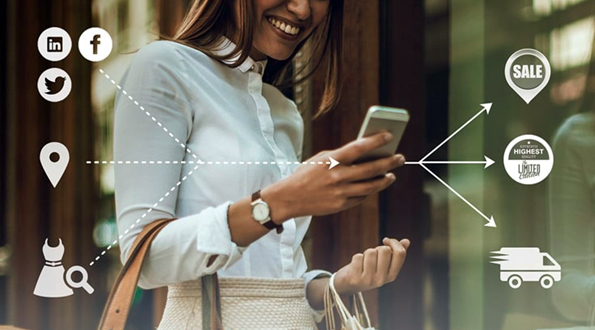
Omnichannel retailing is a strategy of having a presence across all touchpoints, which basically means going beyond bricks-and-mortar locations to mobile-browsing, online marketplaces, social media, and every online channel where the customers can browse. An omnichannel retailing links together all channels, combining the showroom and the website to create a single, unified experience, which means a wrong approach can lead to customer dissatisfaction. For example, there should be consistency in the products showing in all its digital touchpoints and these products must always be updated for their availability, if a product shown online has the wrong cost price compared to offline channel or is mentioned available on the site despite being out of stock, customers will be left disappointed with the shopping experience.
The most pivotal elements of omnichannel service are knowing and understanding the customer completely and consistently executing across all points of brand interaction. Together, these elements ensure the kind of personalised brand experience that creates competitive differentiation for your customer and operational efficiency for you. To fully know and understand your customer, you must be able to view her brand experience holistically to establish the kind of brand relationship that creates trust, strengthens loyalty, and promotes brand advocacy.
As we know the modern customer journey is more fluid and flexible than ever before, the shoppers still expect a single, seamless shopping experience. A shopper may choose to interact with your brand across multiple digital channels, bouncing between social, web, mobile, and more before completing their purchase. In order to provide a unified experience brand’s digital platforms must ensure a faultless movement in each phase of the customer journey –anywhere, anytime, on any device.
The simplicity and enhanced customer experience offered by omnichannel have a number of important payoffs. In particular, they lead to a closer relationship between customers and brand, lower price sensitivities, increase margins and customer loyalty, and overall longer-term value from customers ( CLV). Mobile and social have enabled customers to not only quickly switch between channels, but actually use channels simultaneously. For example, checking out product reviews on their mobile phone while evaluating a product on a physical retail store shelf. In essence, omnichannel marketing recognizes that customers engage with companies or brands in many different ways—across multiple platforms—and grasps the inherent challenge this creates in terms of ensuring consistent experiences
![What is Omnichannel Retailing? - [2020 Definition and Examples]](http://themarketingmusings.com/wp-content/uploads/2020/05/R1.jpg)
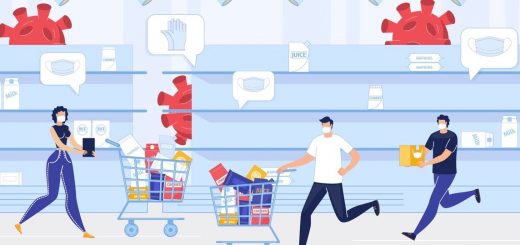
The social distancing and avoidance of public gatherings have evidently given a new direction to retailing, digital and remote buying is going to be the order of the day. Brands are looking at actively promoting an omnichannel approach, if customers don’t want to pay for shipping or wait for products, they want the ability to buy online and pick-up from the nearby brand store quickly. Most customers want to pick-up their product the same day, or many times within an hour(s). This means you need to have product in-stock and the ability to quickly allocate and access it. Consumers will start to emerge from their homes to enjoy the physical shopping experience once the epidemic situation improves, however, many of the online habits developed over this period will remain and flow naturally into consumers expecting a good omnichannel shopping experience.
The epidemic will force retailers to reach new heights in channel integration. They should diagnose their omnichannel capabilities and develop roadmaps for new situations—the first step for businesses seeking to achieve omnichannel transformation and those who have actively invested in the digital strategies will be reaping the benefits.
Create an engaging personalised brand experience would be the mantra for the success in the future, across the segments, and how robust is your GTM strategy to address this new normal is the question to be answered.